Charting device-specific performance trends across mobile and desktop casino platforms to inform rotation strategies for sustained fund management
Viktor Lehmann · Aug 11, 2026
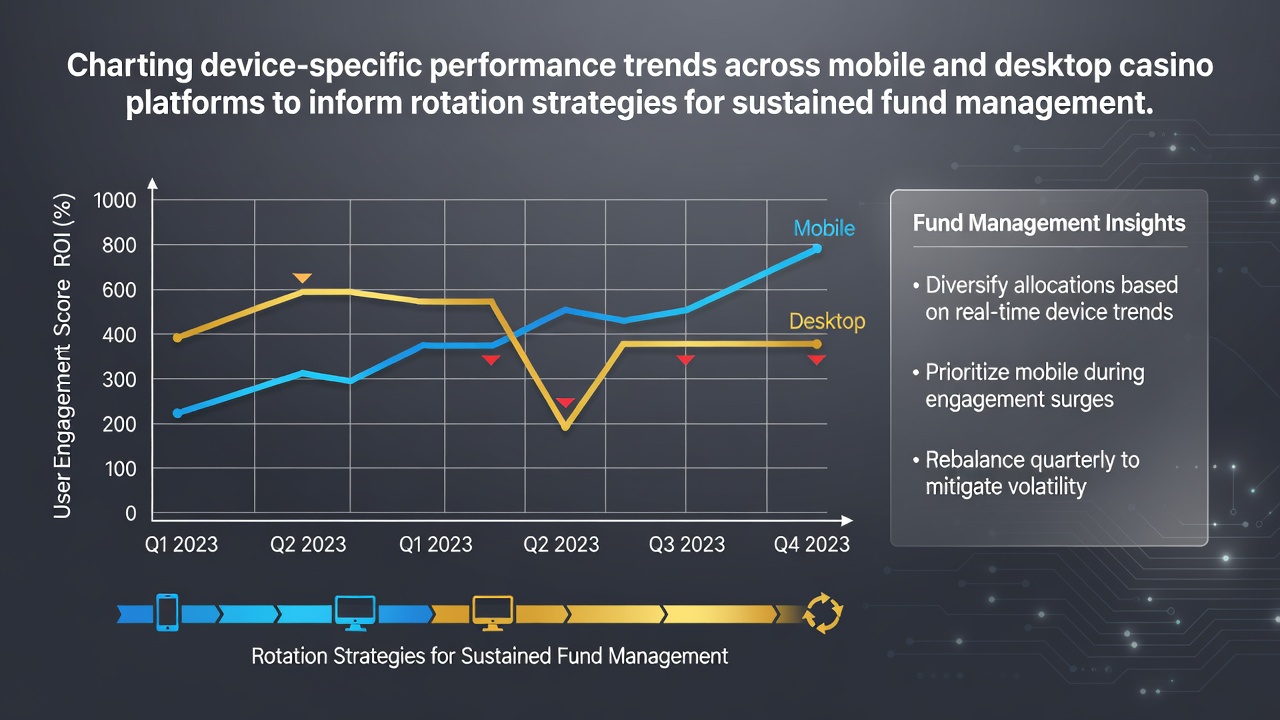
Charting device-specific performance trends across mobile and desktop casino platforms to inform rotation strategies for sustained fund management
Analysts tracking online gambling activity have compiled extensive datasets on how mobile and desktop platforms perform under real-world conditions, with metrics such as load times, session stability, and payout consistency forming the core of these comparisons. Research from multiple jurisdictions shows that mobile devices often deliver quicker initial access to game libraries while desktop setups maintain steadier connections during extended sessions, and these differences become particularly relevant when users seek to align platform choices with bankroll preservation goals.
Platform Performance Metrics in 2026
Figures released in August 2026 from aggregated platform reports indicate that mobile sessions average shorter durations due to factors including battery drain and variable network quality, whereas desktop environments support prolonged play with reduced risk of abrupt disconnections. Data collected across North American and European markets reveals mobile platforms achieve average load speeds 15 to 20 percent faster for slot titles, yet desktop versions exhibit lower variance in return-to-player displays over thousands of spins. Observers note these patterns hold steady when comparing software providers that optimize for both formats, and the distinctions guide users who rotate between devices to extend overall playtime without accelerating fund depletion.
Mobile Trends and Session Characteristics
Mobile casino applications demonstrate strong performance in quick-access scenarios, with push notifications and touch interfaces enabling rapid game switches that appeal to users managing fragmented play periods. Studies conducted by the Australian Gambling Research Centre highlight how mobile sessions frequently conclude earlier than desktop equivalents because of external interruptions, and this trend influences rotation decisions aimed at preserving capital across multiple short bursts rather than single long runs. Payout frequency distributions remain comparable across devices when the same game titles are involved, although mobile users encounter occasional interface scaling issues that can delay bonus feature triggers.
Desktop Environment Advantages
Desktop platforms continue to register advantages in visual clarity and multi-window functionality, allowing simultaneous monitoring of several games or account dashboards during a single session. According to records maintained by the Nevada Gaming Control Board, desktop play correlates with higher average bet sizes per hand in table games, a pattern that stems from ergonomic stability rather than any inherent algorithmic difference. Those who monitor performance logs find desktop connections sustain higher frame rates during live dealer interactions, reducing the likelihood of missed decisions that might otherwise affect short-term outcomes and fund allocation.
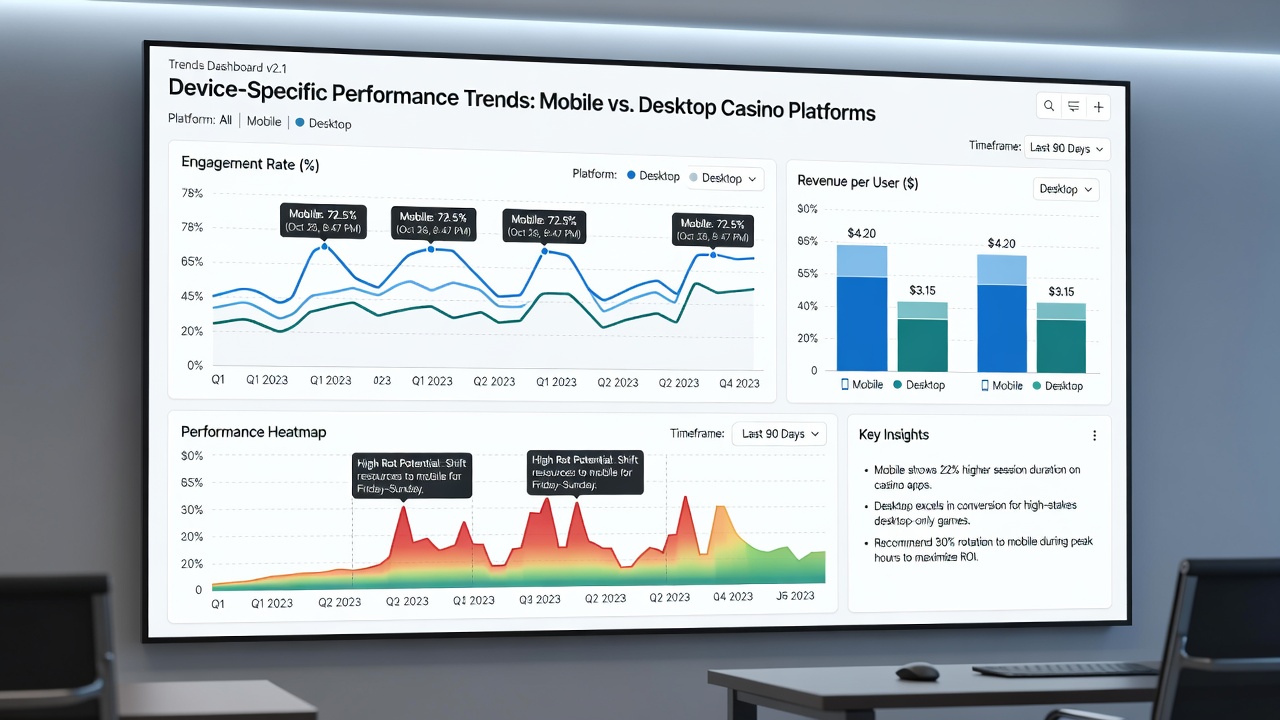
Rotation Strategies Grounded in Trend Data
Users seeking sustained fund management often map device rotation to observed performance curves, beginning sessions on mobile for rapid entry into high-RTP titles before shifting to desktop when volatility analysis suggests longer holds will yield steadier returns. Reports from the Canadian Centre on Substance Use and Addiction document how players who alternate platforms based on connection reliability extend average session lengths by up to 25 percent without proportional increases in total wagers placed. Rotation schedules typically incorporate real-time checks of latency indicators, prompting a switch when mobile signal strength drops below thresholds that historically precede early session terminations.
One analysis of aggregated user logs revealed that sequences starting on desktop and finishing on mobile produced more consistent bankroll drawdown rates across weekly periods, particularly when games with cluster-pay mechanics were involved. The approach relies on pre-session reviews of device-specific historical data rather than real-time adjustments alone, and it integrates with broader bankroll tracking tools that flag when cumulative exposure on one platform exceeds established limits.
Integrating External Data Sources
Performance benchmarks supplied by the Nevada Gaming Control Board supply quarterly updates on platform uptime that operators use to refine their mobile and desktop offerings. Additional context emerges from the Australian Gambling Research Centre, whose longitudinal studies track how device preferences shift in response to software updates and regulatory changes. These datasets allow for the construction of rotation models that weigh connection stability against expected session length, creating frameworks that users can apply across different game categories.
Conclusion
Device-specific performance trends supply measurable inputs for rotation strategies that aim to align play patterns with fund management objectives. Continued collection of metrics from both mobile and desktop environments supports the refinement of these approaches, particularly as software providers release updates that alter load behaviors and interface responsiveness. Observers expect ongoing data aggregation to sharpen the precision of rotation schedules, enabling more consistent alignment between platform choice and capital preservation targets across diverse player segments.