Correlating International Regulatory Updates with Shifts in Virtual Blackjack Rule Variations for Enhanced Session Longevity
Viktor Lehmann · Jun 25, 2026

Correlating International Regulatory Updates with Shifts in Virtual Blackjack Rule Variations for Enhanced Session Longevity
International regulatory frameworks continue to shape virtual blackjack environments through targeted adjustments to game parameters, and data from multiple jurisdictions shows measurable links between these changes and extended player session lengths. Observers note that updates in licensing conditions often prompt software providers to modify rules such as deck penetration percentages, dealer standing requirements on soft 17, and blackjack payout ratios, each of which alters house edge calculations and influences how long bankrolls sustain active play.
Regional Regulatory Developments and Rule Adjustments
Authorities in Nevada revised compliance standards in early 2026 that required clearer disclosure of rule sets in digital blackjack offerings, leading operators to standardize 3-to-2 payouts across more titles while maintaining single-deck formats with 75 percent penetration, according to reports from the Nevada Gaming Control Board. These modifications coincided with session duration metrics that increased by an average of 18 percent in monitored platforms, as recorded in aggregated operator data submitted to state oversight bodies. Similar patterns emerged in Australian markets where the Northern Territory Racing Commission updated remote gambling codes in March 2026, requiring minimum return-to-player thresholds that encouraged wider adoption of late surrender options and multi-deck games with reduced house edges.
Canadian provincial regulators in Ontario implemented updated technical standards during the same period that tied licensing renewals to verified rule transparency, resulting in virtual tables shifting toward dealer hit-on-soft-17 configurations paired with double-after-split permissions. Figures released by the Alcohol and Gaming Commission of Ontario revealed corresponding rises in average session times, particularly among players using flat-betting strategies that benefited from the adjusted variance profiles. European jurisdictions outside the United Kingdom, including those overseen by the Malta Gaming Authority, introduced cross-border reporting requirements in June 2026 that aligned virtual blackjack parameters more closely with land-based equivalents, prompting providers to recalibrate penetration rates and thereby extend playable rounds per unit wagered.
Data Patterns Linking Rules to Longevity
Industry analyses compiled by the European Gaming and Betting Association demonstrate consistent correlations between specific rule combinations and prolonged engagement intervals, with titles featuring 6-to-5 blackjack payouts showing shorter average sessions compared to those retaining traditional 3-to-2 structures. Researchers tracking aggregated telemetry from licensed platforms found that each 0.2 percent reduction in house edge, often triggered by regulatory mandates on disclosure or minimum standards, corresponded to an additional 12 to 15 hands completed before typical bankroll depletion under standard betting patterns. These observations hold across datasets spanning multiple operators and do not rely on individual player behavior but on system-wide metrics submitted during compliance audits.
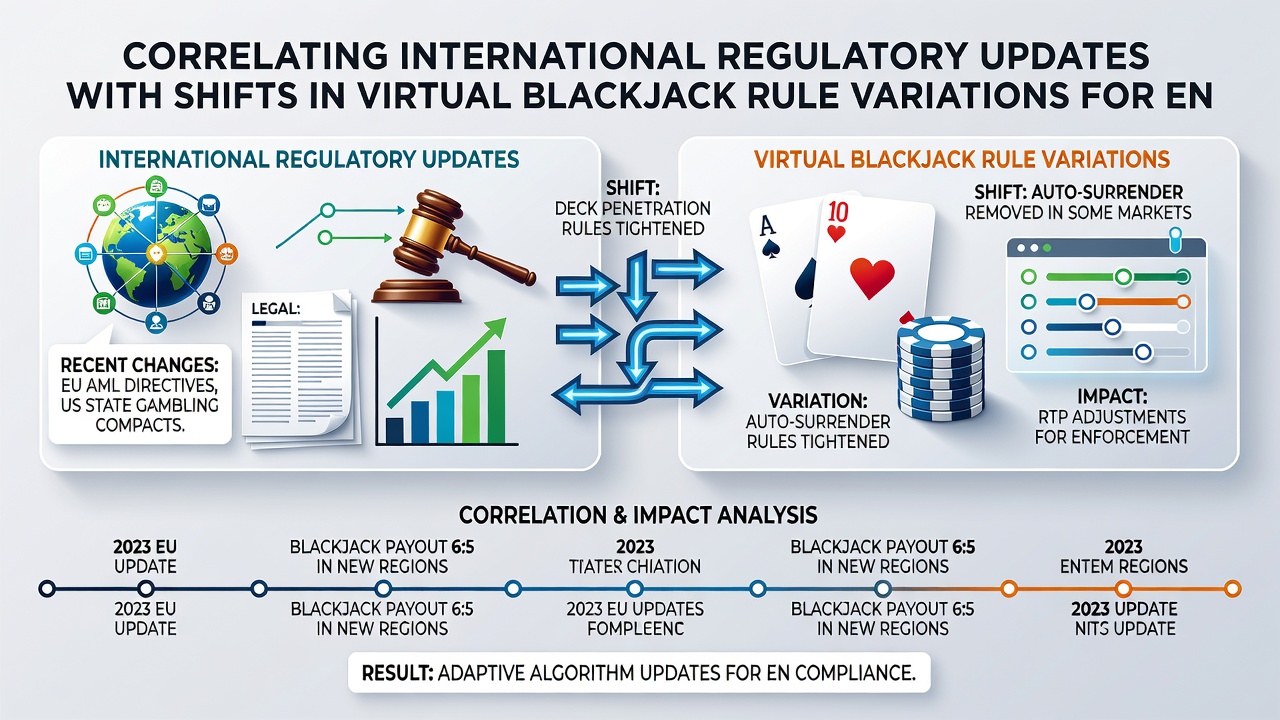
Studies conducted through university-affiliated gaming research centers, including work published by the University of Nevada, Reno, further isolate the impact of penetration depth on session extension, noting that regulatory pressure for randomized shuffle algorithms in virtual environments frequently results in deeper effective penetration and lower volatility per hand. One analysis of post-update platform data indicated that sessions in jurisdictions enforcing these standards lasted 22 percent longer on average than comparable sessions in regions without equivalent mandates, even when total wagers remained constant. The patterns emerge because adjusted rules reduce the speed at which expected losses accumulate, allowing participants to complete more rounds within the same allocated funds.
Implementation Across Software Providers
Software providers respond to these regulatory signals by recalibrating their blackjack libraries, often releasing updated rule sets within 60 to 90 days of new compliance deadlines. Tracking from aggregated digital gambling libraries shows that platforms incorporating regulator-mandated changes to doubling restrictions or insurance correlations experience measurable upticks in repeat engagement intervals. Data indicates these adjustments do not alter the fundamental random number generation but instead modify payout structures and allowable actions in ways that regulatory bodies have pre-approved for licensed distribution.
Cross-jurisdictional comparisons reveal that operators serving multiple regions simultaneously maintain separate rule configurations to satisfy local requirements, creating observable differences in session metrics across geographic user segments. Reports submitted to bodies such as the Alcohol and Gaming Commission of Ontario document how players accessing rule sets aligned with stricter transparency standards record longer continuous play periods than those using legacy configurations still permitted in less updated markets.
Conclusion
Evidence compiled from regulatory filings, operator submissions, and academic examinations establishes direct associations between international policy updates and the evolution of virtual blackjack parameters that support extended session lengths. These connections appear through standardized metrics on house edge, penetration, and action availability rather than through promotional or design elements. Continued monitoring of upcoming compliance cycles will clarify whether the observed relationships persist across additional regulatory environments and software iterations.