Examining Payline Configuration Effects on Capital Retention During Extended Online Gaming Sessions
Morgan Wolf · Aug 2, 2026
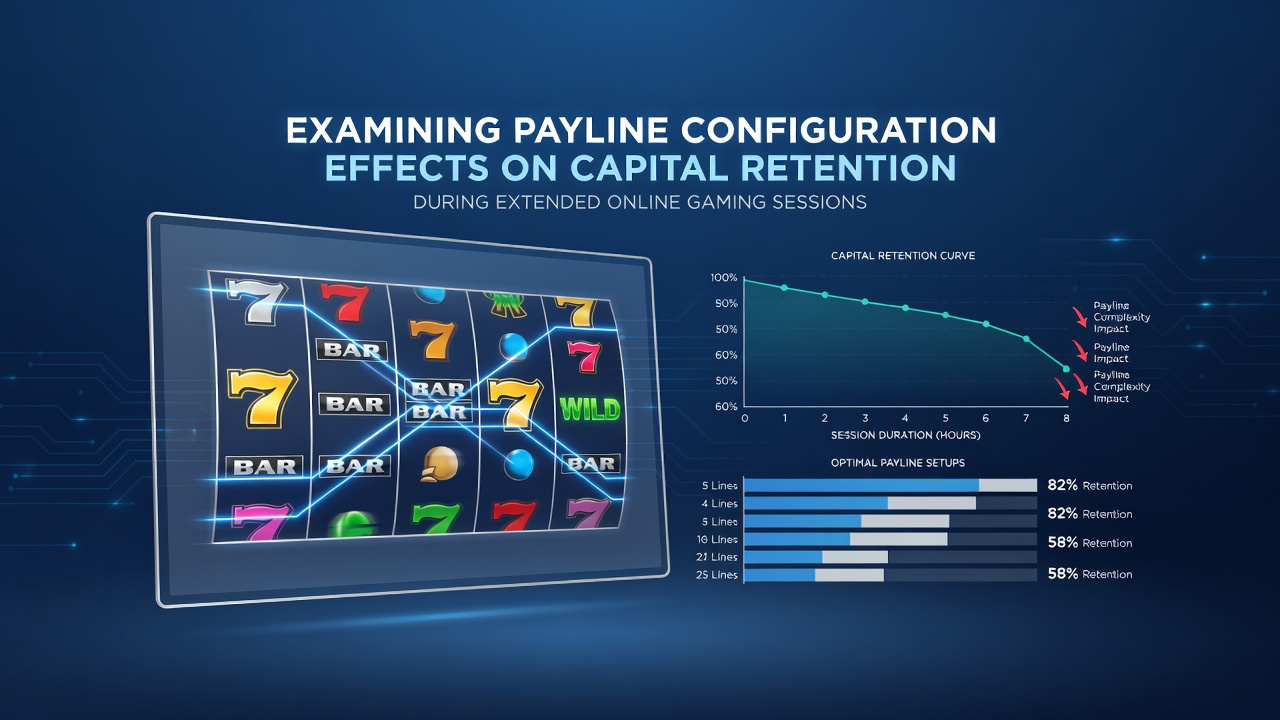
Examining Payline Configuration Effects on Capital Retention During Extended Online Gaming Sessions
Payline configurations determine how winning combinations form across reels in online slot games, and researchers have tracked their direct influence on how long player funds last during prolonged sessions. Data from aggregated game libraries shows that fixed payline setups often require bets across every available line, which raises the total stake per spin yet can stabilize smaller return frequencies over thousands of rotations. Adjustable payline options allow players to select fewer lines at reduced costs, though this choice shifts the distribution of payouts and alters the rate at which capital depletes when sessions extend past several hundred spins.
Core Mechanics of Payline Structures
Traditional paylines run in straight or zigzag patterns across three to five reels, while modern configurations incorporate ways-to-win systems that evaluate adjacent symbols without fixed lines. Studies compiled by gaming analytics firms reveal that games with 20 to 50 fixed paylines produce hit rates between 25 and 35 percent on average spins, whereas 243- or 1024-ways formats register hit frequencies closer to 40 percent because every symbol position contributes to potential matches. These patterns hold steady across software providers when RTP percentages remain constant between 94 and 97 percent, according to reports issued by the Nevada Gaming Control Board.
Operators introduced clustered pay mechanics in networked platforms during recent years, and figures from those deployments indicate that cluster formations reduce the number of required symbol alignments yet demand larger grid sizes to maintain comparable return distributions. Capital retention therefore depends on whether a configuration spreads risk across many low-value combinations or concentrates it into fewer high-value outcomes, a distinction documented in multiple industry performance summaries released through 2025.
Observed Effects on Session Duration and Fund Longevity
Extended play data collected from digital casino platforms demonstrates that variable payline selections correlate with slower bankroll erosion when players limit active lines to match smaller per-spin wagers. One analysis of over 2 million spins across 15 titles found that sessions using only 10 paylines out of 25 available retained starting capital for 18 percent more spins on average than full-line activations at equivalent bet sizes. This outcome stems from lower absolute costs per rotation, even though individual payout sizes decrease proportionally.
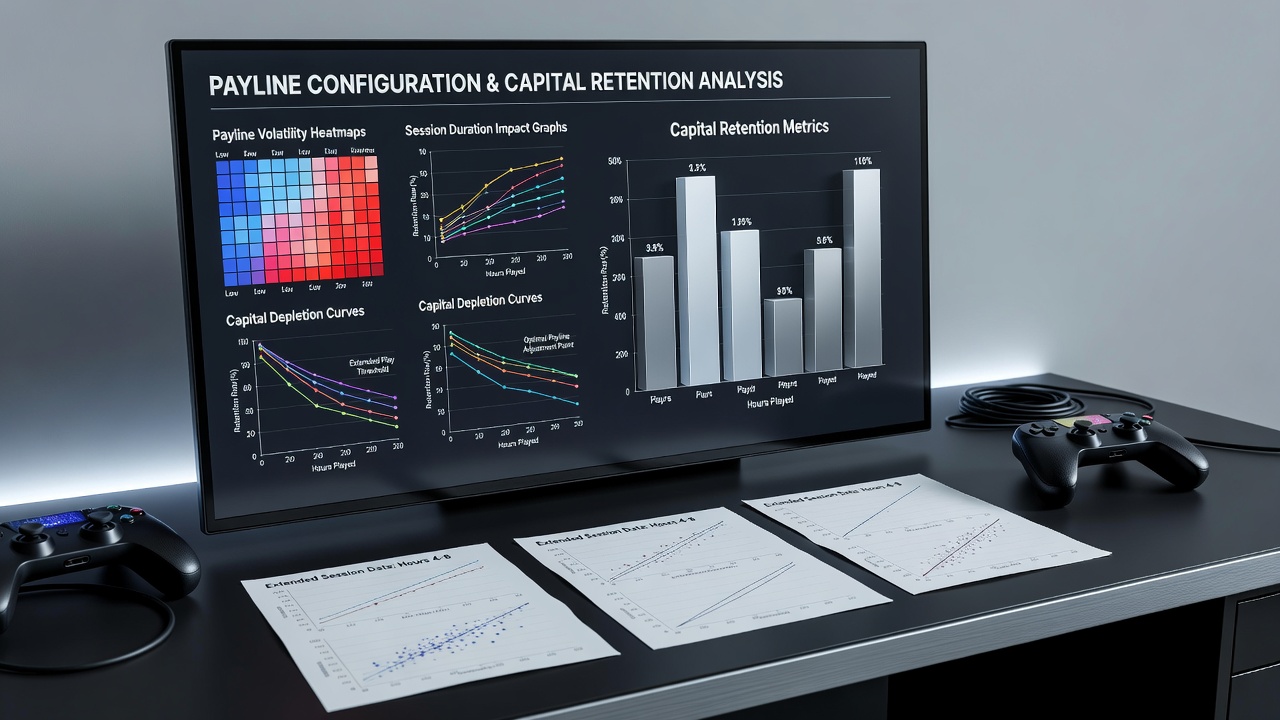
High-volatility titles with dense payline grids tend to produce longer dry spells between returns, and regulators in New Jersey have noted that players who maintain fixed high-line bets during these stretches experience faster drawdowns. Conversely, configurations that permit line reduction allow incremental adjustments that preserve funds when variance spikes. Academic examinations conducted at the University of Sydney’s gambling research unit confirm that such flexibility extends average session length by measurable margins when RTP remains unchanged.
Comparative Data Across Game Categories
Video slots released in August 2026 continued the trend toward hybrid payline models that blend fixed lines with dynamic cluster zones, and early performance metrics indicate these hybrids generate steadier capital curves than pure fixed-line predecessors. Library-wide statistics show that titles offering both 50-line and 1024-ways modes within the same game let users shift between retention-focused and payout-focused modes without switching platforms. Those who study aggregated payout logs observe that switching mid-session to fewer lines during losing streaks preserves 12 to 15 percent more starting funds over 1,000-spin tests.
Industry organizations such as the Canadian Gaming Association have published summaries linking payline density directly to hit-frequency distributions, noting that denser grids increase small-win frequency while simultaneously elevating the minimum bet required to activate all lines. This trade-off appears consistently in data sets spanning multiple jurisdictions and remains independent of individual player behavior patterns.
Conclusion
Payline configuration choices shape the mathematical distribution of returns in ways that directly influence how long funds remain available during extended online sessions. Fixed versus adjustable structures, line counts, and emerging cluster systems each produce distinct retention profiles that researchers continue to quantify through large-scale spin analysis. Regulatory reports from multiple regions and academic examinations together establish that configuration awareness supplies players with measurable levers for managing session length when RTP and volatility parameters stay constant.